
No products in the cart.
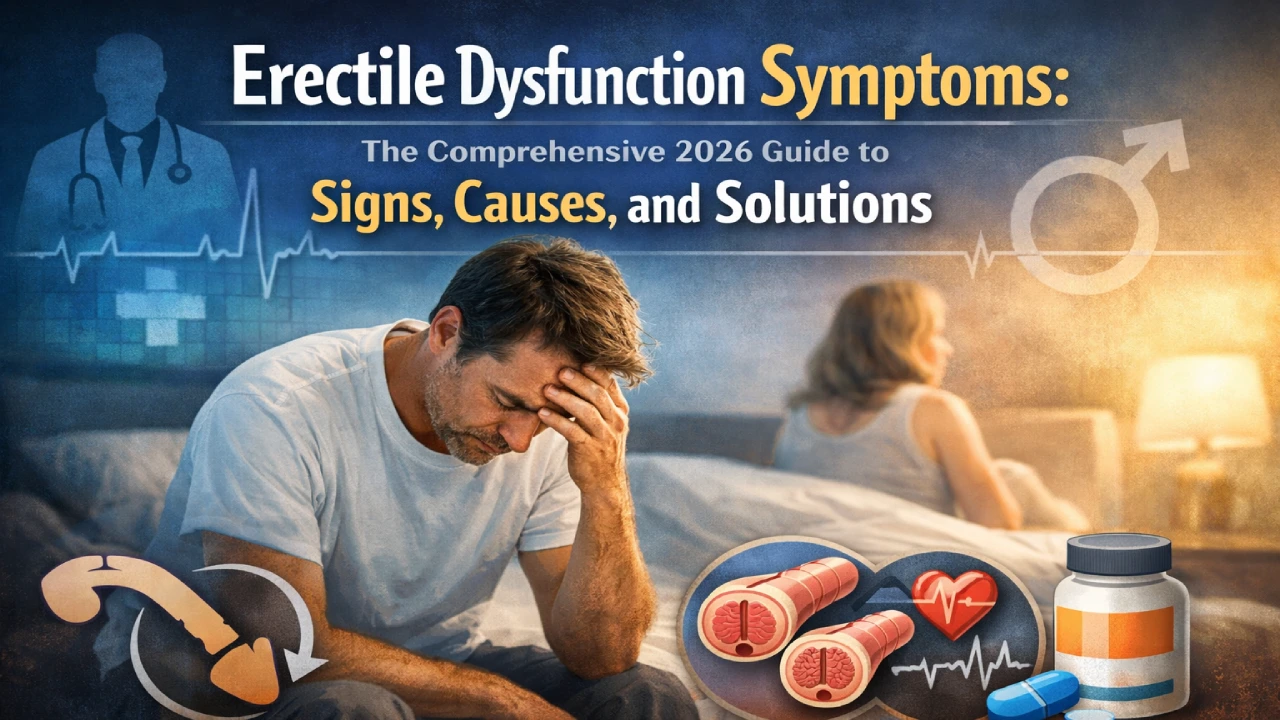
Erectile Dysfunction Symptoms: The Comprehensive 2026 Guide to Signs, Causes, and Solutions
Erectile dysfunction (ED) is one of the most common health conditions affecting men globally, yet it remains one of the least discussed. In 2026, medical science has made it clear: Erectile dysfunction symptoms are not just about “performance”—they are a vital window into your overall vascular and neurological health.
If you have noticed changes in your intimacy, the first thing you need to know is that you aren’t alone. Nearly 40% of men experience some form of ED by age 40, and that percentage grows by roughly 10% for every decade thereafter. However, “common” does not mean “inevitable.”
This 1,000-word guide breaks down the early warning signs, the difference between physical and mental triggers, and how modern treatments like Cenforce Professional can help you bridge the gap back to a confident life.
Contents
- 1 Defining the Spectrum of ED Symptoms
- 2 The “Early Warning System”: Hidden Signs Men Miss
- 3 Physical vs. Psychological: Decoding the Source
- 4 Why 2026 Doctors Call ED “The Canary in the Coal Mine”
- 5 Frequently Asked Questions (FAQ)
- 6 From Symptoms to Solutions: The Path Forward
- 7 Conclusion: Take Charge Today
Defining the Spectrum of ED Symptoms
Many men believe that ED is a binary condition—you either have an erection or you don’t. In reality, ED exists on a spectrum of severity. Doctors typically categorize symptoms into three distinct “Failure Points” in the sexual response cycle.
The “Initiation” Failure (Difficulty Achieving an Erection)
This is the most recognizable symptom. You feel sexual desire (libido) and have a willing partner, but the physical response simply does not follow. Biologically, this often points to an issue with nitric oxide production. Your nerves aren’t signaling your blood vessels to open up wide enough to let blood flow in.
The “Sustainability” Failure (Difficulty Maintaining an Erection)
This is perhaps the most frustrating symptom for men and their partners. You can achieve an initial erection, but it subsides during sexual activity or even during a change in position. This is often caused by a venous leak. In a healthy body, the veins in the penis compress to “trap” blood inside during arousal. If those veins are weak, the blood leaks back out into the body, causing the erection to fail prematurely.
The “Rigidity” Failure (Soft Erections)
Sometimes you can achieve and maintain an erection, but it lacks the “tumescence” or hardness required for comfortable penetration. While technically an erection, clinical “softness” is a primary symptom of mild-to-moderate ED and is often the first sign that cholesterol is beginning to restrict blood flow in smaller arteries.
Also Read: Sildenafil How Long Does It Last? A Complete UK Guide
The “Early Warning System”: Hidden Signs Men Miss
Google rewards “unique insights” in 2026. Most blogs focus on the bedroom, but the most telling ED symptoms often happen when you aren’t trying to have sex.
The Loss of “Morning Wood”
Scientifically known as Nocturnal Penile Tumescence (NPT), morning erections occur during REM sleep. They are the body’s way of “testing the hardware” and oxygenating the tissues.
- The Symptom: If you realize you haven’t woken up with an erection in months, it is a massive red flag.
- The Meaning: NPT is independent of your mental state. If it’s gone, your ED is almost certainly physical/vascular rather than “just in your head.”
The Positional Shift
Do you notice that you can maintain an erection while standing but lose it while lying on your back (or vice versa)? This positional dependency is a subtle symptom of blood pressure fluctuations or early-stage cardiovascular disease.
Reduced Sensation
While often confused with nerve damage, a gradual “numbing” or lack of sensitivity during intimacy can be a precursor to ED. When blood flow is restricted, the nerve endings in the pelvic region don’t receive enough oxygen, leading to a diminished physical response.
Physical vs. Psychological: Decoding the Source
To treat ED effectively—whether with lifestyle changes or medications like Cenforce Professional—you must know where the symptoms are coming from.
| Feature | Physical (Vascular/Hormonal) | Psychological (Mental/Emotional) |
| Onset | Gradual; gets worse over years. | Sudden; happened “out of nowhere.” |
| Morning Wood | Usually absent. | Still occurs regularly. |
| Consistency | Happens every single time. | Happens with a partner, but not alone. |
| Triggers | Smoking, Diabetes, High BP. | Stress, Grief, New Relationship. |
The “Anxiety Loop”
Psychological ED creates a self-fulfilling prophecy. One bad night leads to “Performance Anxiety.” The next time you try, your brain releases adrenaline, which is a natural vasoconstrictor (it narrows blood vessels). This makes a physical response impossible, which leads to more anxiety. Breaking this loop often requires a “safety net” medication to restore confidence.
Also Read: Cenforce vs Kamagra: Which Is Better for ED?
Why 2026 Doctors Call ED “The Canary in the Coal Mine”
The arteries that supply blood to the penis are significantly smaller (1-2mm) than the arteries supplying the heart (3-4mm).
This is critical: Erectile dysfunction symptoms often appear three to five years before a heart attack or stroke. If your “pipes” are getting clogged or restricted, it will show up in the bedroom long before it shows up on a stress test at the cardiologist.
Common “Comorbid” Symptoms:
- High Blood Pressure: Damages the delicate lining of the blood vessels (endothelium).
- Diabetes: High blood sugar causes neuropathy (nerve damage), meaning the “signal” to get an erection never reaches the destination.
- Obesity: Excess fat converts testosterone into estrogen, killing the “drive” needed for performance.
Also Read: How Long Do Kamagra Last? Duration, Timing & Effectiveness Explained
Frequently Asked Questions (FAQ)
Does stress alone cause ED symptoms?
Yes. High-cortisol environments (work stress, financial worry) keep the body in “survival mode.” In survival mode, the body prioritizes blood for the heart and lungs, not for reproduction.
Can I fix ED symptoms without a doctor?
If your symptoms are caused by smoking, lack of exercise, or poor diet, lifestyle changes can sometimes reverse mild ED. However, for moderate-to-severe symptoms, clinical intervention is usually necessary to prevent further vascular damage.
What is the fastest way to treat symptoms?
For immediate symptom relief, sublingual medications like Cenforce Professional are preferred. Because they dissolve under the tongue, they bypass the digestive system and enter the bloodstream directly, often working in 15–30 minutes.
Is ED a normal part of getting older?
No. While it is more common in older men, it is not “normal.” If a 70-year-old is healthy, he should still be capable of achieving an erection. ED at any age is a sign that something—physically or mentally—is out of balance.
From Symptoms to Solutions: The Path Forward
Recognizing these symptoms is a sign of strength, not weakness. In 2026, there is no reason to live with the frustration of ED.
Step 1: The Health Audit
Check your blood pressure and blood sugar. If these are out of range, addressing them is your long-term “cure.”
Step 2: The Lifestyle Shift
Incorporate 30 minutes of cardiovascular exercise daily. What is good for the heart is, quite literally, good for the erection.
Step 3: Modern Support
Don’t be afraid to use modern science. Medications like Cenforce Professional provide the “boost” needed to stay active and confident while you work on the underlying causes. By using a sublingual (under-the-tongue) tablet, you get faster onset and more reliability, removing the “waiting game” that causes so much anxiety.
Conclusion: Take Charge Today
Erectile dysfunction symptoms are a message from your body. Whether it’s a sudden shift due to stress or a gradual change due to age, the most important thing you can do is take action.
By understanding these signs and utilizing the right tools—from lifestyle shifts to high-quality treatments—you can ensure that your 2026 and beyond is defined by confidence, not symptoms.
Also Read: Is It OK to Take 100mg of Sildenafil? Dosage, Safety & Effectiveness Explained
| Written By |
Olivia Bennett (Content Writer)
6+ years of experience in men’s health and pharmaceutical content. |
|---|---|
| Medically Reviewed By |
Dr. Nick Linton 12+ years of clinical experience in men’s health and sexual medicine. |
| Last Reviewed | 19/03/2026 |
| Next Review | June 17, 2026 |
| Category | Men's Health |
Written and reviewed by

Olivia Bennett
Health Content Writer & Medical Research Contributor